
Originally submitted to the Texas Trophy Hunters Association on January 26, 2026, for publication consideration
“The land north of Comstock, Texas does not announce itself gently. Seven miles beyond the town, at Dead Man’s Pass Ranch just east of the Devil’s River in Val Verde County, the country opens into a hard, honest stretch of semiarid scrubland cut by deep canyons. It is the kind of place where nothing survives by accident. Everything that lives there be it man, plant, or animal does so by awareness, patience and resilience.
I arrived in mid January, the hunt being from the 15 through the 18th, with the nights dropping into the low thirties and in the days climbing toward sixty degrees. The wind never fully rested and at times pushing steady at fourteen miles per hour slipping through the canyons and brushing the mesquite and sotol with a constant dry whisper. This was Aoudad country, and I had come to test myself against an animal as alert and unforgiving as the land itself.
I hunted with a professional guide named Jon Lomas. Though I hunted alone in the truest sense being one rifle, one set of decisions, Jons expertise mattered. He knew the land and the habits of the Auodad that lived in it. We shared easy conversation, the koind that comes naturally when two men focused on the same purpose. There was no rush in him and no need to fill the silence. Out there silence was not empty; it was information.
Our days began early, well before the sun lifted over the rim of the canyons and they stretched long into the evening. Hunting Aoudad is not a matter of simply finding animals. They were everywhere coming into the feeder at a place outside Del Rio, Texas, but abundance does not mean opportunity. Aoudad are intelligent wary animals. Any unusual movement, any sound out of place and they were gone, flowing across the rock and scrub with surprising speed and coordination.
What made them even more difficult was their discipline. The rams stayed tucked tightly in the center of the ewes, using the herd itself as protection. It was instinct refined by survival. They watched while others fed. They waited while others moved and they fled as one. Jon and I watched this pattern repeat itself again and again. The patience required to wait for a single ram to break from that formation pressed heavily on us, not because of frustration but because of the discipline it demanded. This took five outings for the right condition. The terrain did nothing to make patience easy. Every step through Rough Canyon had to be considered. The ground was littered with prickly pear cactus, agave lechuguilla, pin cushion cactus, mesquite scrub and sotol. There was not such thing as a careless stride. The land punished inattention. By the time the moment came, I was already fatigued and not from weakness being only seventy one years old but from the constant effort required to move deliberately, quietly and without injury.
The cold added another layer. The temperature had dropped enough that my hands struggled to stay steady. When I finally settled in behind the 300 Winchester Magnum the wind pressed against me and the chill crept through my gloves and into my fingers. Keeping the scope stationary took real effort. The rifle felt heavier than it had on the range. The land had already taken its toll and the shot had not yet been fired. Then it happened.
One ram for reasons known only to instinct or chance stepped away from the herd. He isolated himself near the rim of a cliff, just far enough to break the protective pattern the others held. The range was 220 yards. It was not a rushed moment but it was not a forgiving one either. I remember the sound of my breathing in my ears, the feel of the stock against my shoulder and the way the world seemed to narrow down to that single animal standing against the edge of the canyon.
I waited until everything aligned, breath, sight, picture and resolve. The wind did not stop and the cold did not ease but clarity came anyway. When I took the shot it was one clean round. The ram fell and the canyon absorbed the sound carrying it away on the wind. After the shot there was no shouting no celebration that broke the stillness . Jon and I looked at each other, both knowing what the moment meant. Respect follows immediately after success if the hunt is done right. The work was not finished. It never is.
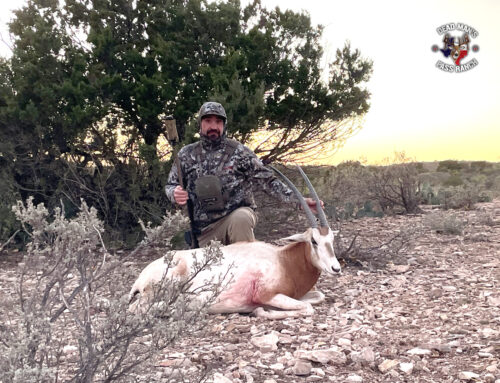
Retrieving the ram reminded me again that nothing in Rough Canyon is given freely. With all our strength Jon and I lifted the animal into the bed of the truck. Muscles burned and breath came hard. But there was satisfaction in the labor. Then Jon and I cheered and jumped up and down. It was the honest cost of the harvest, paid in effort rather than ease. The ram a 3.5 year old with 22 inch horns and weighing around 165 pounds. Not a trophy size but a trophy to me.
As the day wore on and the light softened, the land seemed to settle back into itself. The canyon walls caught the fading sun and scrub cast long shadows across the rocky ground. What struck me most was not the harshness of the place but its balance. Rough Canyon felt like an oasis not because it was gentle but because it sustained life through precision. Everything there knew its role. Everything paid attention.
By the end of the hunt I felt something I had not expected so clearly a feel of rejuvenation. The cold, the fatigue, the patience and the discipline had stripped away noise and distractions. What remained was focus and renewal. Hunting at its core is not about domination. It is about alignment with the land with the animal and with oneself.
Driving out of Dead Man’s Pass Ranch I carried more than the memory of a successful Aoudad hunt. I carried the reminder that tradition endures because it demands something of us. Early mornings, long evenings, stillness, respect and strength. Rough Canyon did not offer comfort but it offered clarity and that in the desert is its own kind of oasis.”
– Kelly Yarbro